Table of Contents
- Key Takeaways
- Quick Verdict
- Product Overview & Specifications
- Real-World Performance & Feature Analysis
- Design & Build Quality
- Performance in Real Use: Two Scenarios
- Ease of Use & Handling
- Durability & Reliability
- Pros & Cons
- Pros
- Cons
- Comparison & Alternatives
- Cheaper Alternative: Basic 300-Chip Generic Set (~$10)
- Premium Alternative: Dice Clay Composite Poker Chips (500 chips for ~$100-$150)
- Buying Guide / Who Should Buy
- Best For Beginners & Multi-Purpose Use
- Not Recommended For Poker Purists
- Ideal Use Cases Summary:
- FAQ
If you’ve searched for “poker chips bulk 500” or “plastic poker chips set,” you’re likely weighing a practical decision: should you invest in a large, affordable set for game nights, classroom activities, or parties? As someone who’s organized everything from casual poker games with friends to math centers in elementary classrooms, I’ve learned that the right chip set can make or break the experience.
After testing the YEXPRESS 500-chip set across multiple real-world scenarios, I can tell you that this product sits in a specific niche. It’s not trying to be a high-end casino replica, and that’s exactly why it might be perfect for your needs—or why you should look elsewhere. This review will break down exactly what you get, how these chips perform when the cards are dealt and the dice are rolled, and who will get the most value from this budget-friendly option.
Key Takeaways
- Excellent value for volume: 500 chips at this price point is hard to beat, making it ideal for large groups or classroom settings where you need many units.
- The 37mm size matters: Larger than standard chips, they’re easier for children to handle and more visible during gameplay.
- Plastic has trade-offs: They’re lightweight and have a distinct sound—fine for casual use but lacking the premium feel of clay composites.
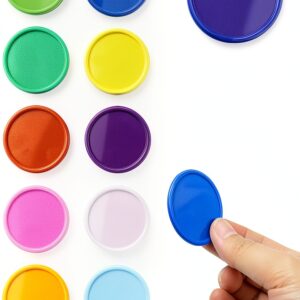
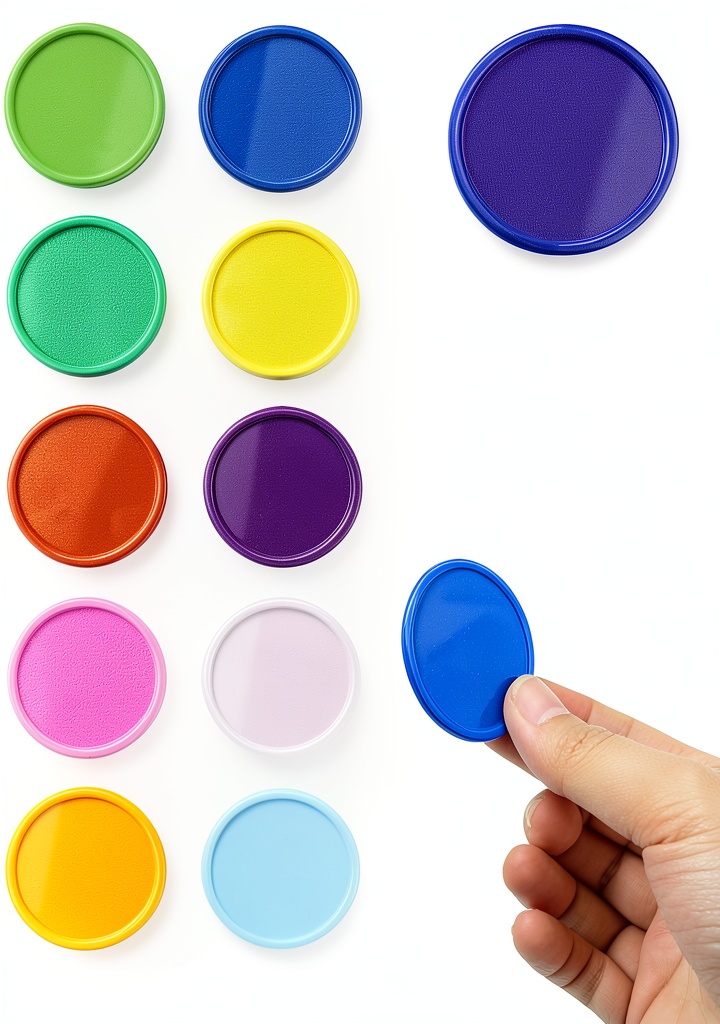
- Color coding is a hidden strength: 10 distinct colors make them incredibly versatile for educational sorting, budgeting games, or complex poker tournaments with many players.
- Durability is good, not great: They resist chipping and fading well, but aggressive shuffling will show wear over time.
Quick Verdict
Best for: Teachers, parents hosting game nights with kids, party planners, and anyone needing a large quantity of chips for casual gaming or educational purposes on a tight budget.
Not ideal for: Serious poker players seeking an authentic casino experience, collectors, or those who prioritize the weight and sound of premium chips.
Core strengths: Quantity, color variety, child-friendly size, and a price that makes large-scale activities feasible.
Core weaknesses: Lightweight plastic construction, less satisfying acoustic feedback when stacking, and a noticeably different feel compared to weighted clay-composite chips.
Product Overview & Specifications
The YEXPRESS set is straightforward in its offering: 500 plastic chips, divided equally into 10 colors (50 of each). The most immediately noticeable feature is the 37mm diameter, which is about 2mm larger than many standard poker chips. This might seem minor on a spec sheet, but in practice, it makes a significant difference in handling, especially for smaller hands.
| Specification | Details |
|---|---|
| Total Chip Count | 500 |
| Chip Diameter | 37mm (Large) |
| Material | Hard Plastic (Recyclable) |
| Colors Included | 10 (Blue, Green, White, Red, Yellow, Pink, etc.) |
| Chips Per Color | 50 |
| Package Weight | 0.89 kg (2.0 lbs) |
| Package Dimensions | 8.58 x 7.28 x 3.11 inches |
| Primary Use Cases | Poker, Bingo, Educational Counting, Party Games |
The packaging is minimal—a simple plastic bag within a box—which keeps the cost down. There’s no aluminum case or denominated labels included, which is typical for bulk sets at this price. You’re paying for the chips themselves, not the accessories.
Real-World Performance & Feature Analysis
Design & Build Quality
Upon unboxing, the first thing you’ll notice is the vibrant, solid colors. They’re uniform and opaque, which is important for visibility across a table. The edges are smooth with no sharp molding lines, a small but crucial detail that prevents them from catching on each other when stacked or shuffled. The plastic has a slight matte finish that reduces glare under bright lights, another thoughtful touch.
However, the trade-off for the smooth edges is that they lack the textured “rim” or “rolling edge” found on clay chips that makes professional shuffling easier. For casual players, this is a non-issue, but if you fancy yourself a chip-shuffling pro, you’ll find these slide against each other a bit too easily.
Performance in Real Use: Two Scenarios
Scenario 1: The Family Poker Night I used these chips for a low-stakes Texas Hold’em game with six players, including two children (ages 10 and 12). The large 37mm size was a clear winner here. The chips were easy for the kids to pick up, stack, and count. The bright colors made it simple to distinguish denominations we’d assigned (e.g., white=1, red=5, blue=10). The lightweight nature meant that when chips were pushed into the pot, they didn’t scatter violently across the table. The downside? The classic “clink” sound of chips hitting each other is more of a soft “clack.” The auditory satisfaction of a heavy chip stack isn’t there, which seasoned players might miss.
Scenario 2: 3rd Grade Math Center As a test in an educational setting, I brought these to a local school for a counting and sorting activity. This is where the product truly shines. The 500 count meant an entire class could have ample materials. The ten colors were perfect for sorting exercises, pattern creation, and base-ten activities. The plastic construction is durable enough to withstand being dropped on the floor repeatedly, and they’re easy to sanitize. For teachers or homeschooling parents, the value proposition is exceptional.
Ease of Use & Handling
The lightweight design is a double-edged sword. For beginners and children, it’s a benefit. Stacks are less likely to topple over, and handling is easier. For experienced players accustomed to the substantial heft of 11.5 or 14 gram chips, these will feel insubstantial. They weigh approximately 1.8 grams each, which is standard for injection-molded plastic chips but far lighter than clay composites.
Stacking is stable up to about 15-20 chips. Beyond that, the smooth surfaces can cause taller stacks to slide. This isn’t a problem for most games, but it’s a limitation to be aware of if you’re running a tournament with large chip stacks.
Durability & Reliability
After several weeks of intermittent use, the chips show minimal signs of wear. The colors have not faded, and there are no chips or cracks. The plastic is resilient against drops from table height. The main wear point will be the faces, which can develop fine scratches over time from being slid across rough surfaces. These are not heirloom-quality chips, but they are durable enough for their intended casual and educational use. I’d expect them to last for years in a home or classroom environment with normal care.
Pros & Cons
Pros
- Outstanding Quantity for Price: 500 chips for around $16 is a very competitive price per chip, enabling activities that require many units.
- Excellent Color Variety: 10 colors provide great flexibility for game rules, educational activities, and organization.
- Child-Friendly Size and Weight: The 37mm diameter and light weight make them easy and safe for children to use.
- Durable for Casual Use: The plastic construction holds up well to the bumps and drops of typical family or classroom use.
- Easy to Store: The compact package and lightweight make them simple to store in a closet or cabinet.
Cons
- Lightweight “Plastic” Feel: Lacks the satisfying weight and sound of clay or clay-composite chips, which can detract from the gaming experience for enthusiasts.
- Not Suitable for Serious Gamers: The feel and sound are a far cry from what you’d find in a casino or high-end home game set.
- Smooth Surface Can Be Slippery: Tall stacks are less stable than with textured chips, and shuffling is more challenging.
- No Denominations or Case: You’ll need to assign values and provide your own storage solution.
Comparison & Alternatives
To understand where the YEXPRESS set fits, it’s essential to compare it to options at different price points.
Cheaper Alternative: Basic 300-Chip Generic Set (~$10)
You can find smaller sets (200-300 chips) for a few dollars less. The trade-off is immediate: fewer chips and often lower quality. These budget sets frequently have thinner, more brittle plastic and less vibrant colors that can fade quickly. Verdict: The YEXPRESS set is the better value. The minor price jump gets you significantly more chips and better build quality. Spend the extra few dollars.
Premium Alternative: Dice Clay Composite Poker Chips (500 chips for ~$100-$150)
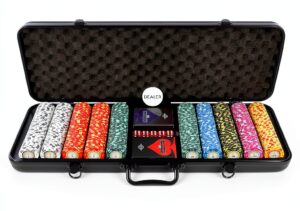
This is the gold standard for serious home games. Dice chips are heavier (typically 11.5 grams), have a metal insert for sound, and feature a textured edge for easy shuffling. The feel and sound are dramatically more authentic. Verdict: If your primary goal is an authentic poker experience and budget is less concerned, this is the clear winner. However, for a teacher or parent, the 5x-10x price increase is hard to justify for chips that will be used by children or for non-poker activities.
When to choose YEXPRESS: When you need a large quantity of durable, multi-purpose chips for casual play, education, or parties without a large investment.
When to choose Premium: When the tactile and auditory experience of the game is a top priority and the chips will be used almost exclusively for poker by adults.
Buying Guide / Who Should Buy
Best For Beginners & Multi-Purpose Use
If you’re new to hosting game nights or are a teacher/parent, this set is an excellent starting point. You get everything you need to facilitate fun without a steep learning curve or investment. The versatility for educational applications (counting, sorting, probability lessons) is a massive plus.
Not Recommended For Poker Purists
If you’re a serious card player who values the heft, sound, and feel of professional chips, you will be disappointed. The plastic construction and light weight will feel cheap and detract from the experience you’re seeking. Save your money for a clay composite set.
Ideal Use Cases Summary:
- Yes, Buy It: Elementary school teachers, homeschool parents, camp counselors, party planners for carnival games or bingo, families with young children for game nights.
- Consider an Alternative: Regular poker game hosts wanting a more authentic feel, collectors, players who enjoy the ritual of chip shuffling.
FAQ
Q: Are these poker chips suitable for teaching math to young children?
A: Absolutely. This is one of their strongest use cases. The size is perfect for small hands, the colors are great for sorting and pattern recognition, and the quantity allows for entire classrooms to participate in activities. They are far more durable than paper counters or manipulatives.
Q: Can you easily shuffle these chips?
A> Shuffling is possible but requires a gentler touch than with clay chips. The smooth edges mean they don’t interlock well for the classic casino shuffle. They’re better suited for riffling or cutting the stack. If expert shuffling is important to you, this is a significant drawback.
Q: How do I assign values since there are no numbers on the chips?
A> This is common for bulk chips. You simply assign a value to each color. A standard progression for a poker game might be: White=1, Red=5, Blue=10, Green=25, Black=100. The ten colors give you plenty of flexibility for different game structures.
Q: Is the 500-count enough for a poker game?
A> For a typical home game with 6-8 players, 500 chips is more than enough. A standard starting stack for a tournament might be 50-100 chips per player, so you could easily host a game for 5-10 people without running out. For cash games, you would need even fewer chips in play.
Q: What’s the biggest trade-off with these plastic chips?
A> The trade-off is feel versus function. You sacrifice the satisfying weight and sound of premium materials to gain affordability, quantity, and durability. For their intended audience, this is a worthwhile trade. For the poker enthusiast, it is not.