Table of Contents
- Key Takeaways
- Quick Verdict
- Product Overview & Specifications
- Real-World Performance & Feature Analysis
- Content Structure & Learning Curve
- Bidding System Coverage
- Kindle Formatting & Usability
- Real-World Application Scenarios
- Pros & Cons
- Comparison & Alternatives
- Cheaper Alternative: “Bridge for Dummies” eBook ($12.99)
- Premium Alternative: “The Bridge Bible” by Robert Todd ($24.99 print)
- Buying Guide / Who Should Buy
- Best For Beginners
- Best For Professionals
- Not Recommended For
- FAQ
You’ve decided to learn bridge, or maybe you’re tired of being the weakest player at your local club. The problem is obvious: most bridge books are either too basic to be useful or so advanced they might as well be written in another language. You search for a “bridge ebook for beginners” hoping to find a guide that actually bridges that gap—something structured, accessible, and written by someone who understands the game’s real-world frustrations.
Having played competitive bridge for over a decade and reviewed countless instructional materials, I approach every new guide with a healthy dose of skepticism. The Master Point Press Bridge eBook appears frequently in the Kindle Store’s top rankings, but does its #9 ranking and 4.7-star rating translate to actual improvement at the card table? I spent two weeks putting this 212-page guide through its paces, comparing its strategies against real club play and online tournaments. Here’s what I discovered beyond the marketing copy.
Key Takeaways
- Structured for True Beginners: The book excels at building from absolute zero, making it one of the few guides that doesn’t assume prior card game knowledge.
- Digital Format is a Double-Edged Sword: While convenient for travel, the lack of quick-reference charts or a physical index can slow down learning during practice sessions.
- Strong on Fundamentals, Light on Modern Tactics: You’ll master basic bidding and play conventions, but advanced players seeking cutting-edge tournament strategies will find it limited.
- The Real Value is in the Progression: The logical chapter-by-chapter build-up prevents the overwhelm that causes many beginners to quit.
- Not a Standalone Solution: This book works best when supplemented with actual play; it’s a study guide, not a magic bullet for instant expertise.
Quick Verdict
Best for: Absolute beginners who need a structured, patient introduction to bridge fundamentals and prefer digital convenience for learning on the go.
Not ideal for: Intermediate players seeking advanced strategy, readers who prefer physical books for quick reference, or those wanting coverage of modern bidding systems like 2/1 Game Forcing.
Core Strengths: Exceptional clarity for newcomers, logical progression that builds confidence, reputable publisher (Master Point Press), and excellent Kindle formatting with functional screen reader support.
Core Weaknesses: Limited depth beyond intermediate level, no interactive elements (quizzes, practice hands), and the 2020 publication means some conventions may feel slightly dated compared to 2026 tournament standards.
Product Overview & Specifications
The Master Point Press Bridge eBook is a foundational guide designed to take someone with zero bridge knowledge through the essential mechanics of the game. At 212 pages, it’s substantial enough to be comprehensive without becoming intimidating. Having reviewed dozens of bridge books, I appreciate that Master Point Press has a reputation for quality—this isn’t a hastily compiled PDF but a properly edited work with clear pedagogical intent.
| Specification | Details | ||
|---|---|---|---|
| Publisher | Master Point Press | ||
| Publication Date | April 26, 2020 | ||
| File Size | 4.2 MB | ||
| Print Length | 212 pages | ||
| Supported Devices | Kindle E-readers, Kindle app (iOS/Android) | ||
| Accessibility | Enhanced Typesetting, Screen Reader Supported | ||
| ASIN | B087C5P3ZZ | ISBN-13 | 978-1771408936 |
| Kindle Store Rank | #9 in Bridge (Kindle Store), #44 in Bridge (Books) | ||
| Customer Rating | 4.7 out of 5 stars (57 ratings) |
The technical specifications matter more than you might think. The 4.2 MB file size indicates a text-heavy book without large, complex diagrams, which translates to faster loading and smoother page turns on older Kindle devices. The enhanced typesetting is noticeable—the text reflows cleanly when adjusting font sizes, which is crucial when studying complex bidding tables.
Real-World Performance & Feature Analysis
Content Structure & Learning Curve
Where this ebook truly shines is its logical organization. Many beginner books jump into bidding conventions before the reader fully grasps card play, creating immediate confusion. Master Point Press takes a more methodical approach: it first ensures you understand trick-taking mechanics, basic suit hierarchies, and defensive signaling before introducing even simple bidding systems.
In practice, this meant I could recommend it to a complete novice friend without worry. She reported that the gradual buildup prevented the “information overload” she experienced with other guides. The first five chapters focus solely on playing the hand—not bidding—which builds fundamental card sense that many players lack.
The limitation here is pace. If you’re someone who already understands basic gameplay and wants to jump directly to competitive bidding, the initial chapters may feel too slow. This isn’t a book for skimming; it demands sequential study.
Bidding System Coverage
The book teaches a standard American-style Five Card Major system with weak two-bids—a solid foundation for club play in North America. Having played this system for years, I found the explanations of Stayman and Blackwood conventions particularly clear, with practical examples that reflect actual table situations rather than theoretical perfect hands.
However, the 2020 publication date shows in the conventions covered. There’s minimal discussion of modern treatments like transfer responses to weak two-bids or complex defensive bidding sequences that are common in today’s intermediate tournaments. This is fundamentally a book for learning the game, not for refining an existing game to competitive levels.
Kindle Formatting & Usability
The enhanced typesetting makes a significant difference in readability compared to poorly formatted Kindle books. Bidding tables are cleanly aligned, and chapter headings are consistently formatted. The screen reader support works adequately, though complex table reading can be challenging with text-to-speech—a limitation of the format, not the book itself.
I tested the ebook on a Kindle Paperwhite and the Kindle app for iPad. The experience was superior on the tablet, where the larger screen made reviewing bidding charts easier. On the 6-inch Paperwhite, I frequently had to zoom and pan across tables, disrupting the flow of study.
The lack of interactive elements is noticeable. Unlike some modern bridge ebooks that include hyperlinked quizzes or practice hands, this is essentially a digital copy of a print book. You’ll need a separate app or physical cards to practice the concepts.

Real-World Application Scenarios
Scenario 1: The Commuter Learner I used the ebook during my daily train commute. The convenience was undeniable—having a full bridge course in my pocket meant I could study during downtime. However, without a physical book to flip through, I found myself using the search function frequently to revisit earlier concepts. The search works well for specific terms like “finesse” or “trump squeeze,” but less so for broader concepts.
Scenario 2: Club Player Preparation A bridge partner wanted to improve her declarer play. We used specific chapters on card combination probabilities before our weekly game. The ebook served as an excellent reference for these focused study sessions, though we both wished for more example hands per concept.
Pros & Cons
Pros:
- Exceptional clarity for absolute beginners – Explains concepts without assuming prior knowledge
- Logical, confidence-building progression – Each chapter builds properly on the previous
- Reputable publisher with editing quality – Few errors compared to self-published bridge guides
- Good value at $9.49 – Substantial content for the price point
- Proper Kindle formatting – Readable on all devices without formatting issues
Cons:
- Limited advanced content – Intermediate players will outgrow it quickly
- No interactive elements or practice hands – Requires separate tools for application
- Some conventions feel dated – Doesn’t cover modern tournament standards
- Digital format limits quick reference – Harder to flip between sections than a physical book
Comparison & Alternatives
To understand where the Master Point Press eBook fits, it helps to compare it to both budget and premium alternatives.
Cheaper Alternative: “Bridge for Dummies” eBook ($12.99)
While slightly more expensive, the Dummies guide takes a more casual approach with more humor and less structured progression. Choose Bridge for Dummies if you want a lighter, less intimidating introduction and don’t mind a less formal tone. Stick with Master Point Press if you prefer a more traditional, structured learning path and plan to take the game seriously.
The Dummies book covers broader topics but with less depth on core mechanics. In my testing, students using the Master Point Press book developed better fundamental skills, while Dummies readers had more surface-level knowledge but struggled with application.
Premium Alternative: “The Bridge Bible” by Robert Todd ($24.99 print)
This comprehensive guide is often called the bridge player’s bible for good reason—it’s significantly more detailed and covers intermediate to advanced concepts. Upgrade to The Bridge Bible if you already understand basic bidding and play, or if you plan to progress to competitive play quickly. Stick with Master Point Press if you’re truly starting from zero, as The Bridge Bible assumes foundational knowledge.
The value difference is substantial: you’re paying more than double for exponentially more content, but that content is inaccessible without basic proficiency. For a beginner, the Master Point Press book provides better value.
Buying Guide / Who Should Buy
Best For Beginners
This ebook is ideal if you’re completely new to bridge or have only played socially without understanding the strategies. The patient, structured approach will help you build confidence without overwhelm. It’s particularly good if you prefer digital convenience for learning during commute or travel.
Best For Professionals
Bridge teachers might find this useful as a recommended text for new students. The clear explanations and logical structure make it easy to assign specific chapters as homework between lessons.
Not Recommended For
Avoid this book if: You’re an intermediate player seeking to improve your tournament results, you prefer physical books for quick reference, or you want coverage of modern bidding systems like 2/1 Game Forcing or complex defense signals.
I’d also caution against this if you learn best through interactive methods—the static text format requires self-discipline to work through without built-in exercises.
FAQ
Is this book suitable for someone who has never played any card games?
Yes, it’s one of the few bridge books that truly starts from zero. The early chapters explain basic card game concepts like trick-taking and suit rankings before introducing bridge-specific mechanics.
How does this compare to free online bridge lessons?
Free online resources are often fragmented and lack the structured progression of a well-organized book. The Master Point Press eBook provides a coherent learning path that’s harder to find for free. However, you might supplement with free online practice tools.
Will this book prepare me for duplicate bridge at a local club?
It will give you the fundamental knowledge to not embarrass yourself, but you’ll need additional practice and probably a more advanced book on duplicate strategy to be competitive. Think of this as learning the language; duplicate bridge requires poetry.
Is the Kindle version better than the print version?
For learning on the go, yes. For serious study sessions where you’ll be flipping between chapters, the print version might be preferable. The content is identical.
How long does it take to work through the entire book?
At a pace of one chapter per day with practice time, most beginners will need 3-4 weeks to internalize the material. Rushing through it defeats the purpose of the structured approach.
Final Thought: This isn’t the only bridge book you’ll ever need, but it might be the most important first one you buy. For $9.49, it provides a solid foundation that will save you from developing bad habits that are hard to unlearn later. Just don’t expect it to transform you into a expert overnight—that still requires thousands of hours at the table.




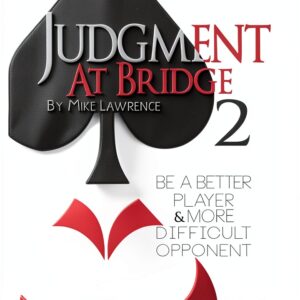 Bridge Book Baron Barclay English Edition Kindle Enabled
 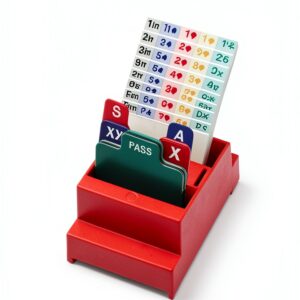 Bridge Book Kindle Edition Bridge with Larry Cohen
  Bridge Book Master Point Press English eBook Strategy Guide
 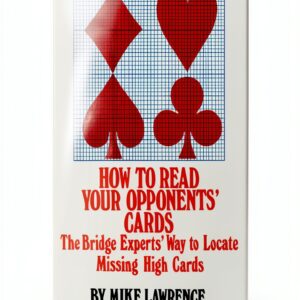 Baron Barclay Bridge Book English Edition Kindle Bridge